football:researchers
  • :: Home ::
  • Teams
    • Premier League
    • Championship
    • League One
    • League Two
  • :: Resources ::
  • :: Contact ::

FOOTBALL RESEARCHERS

tommy clare

23/3/2013

0 Comments

 
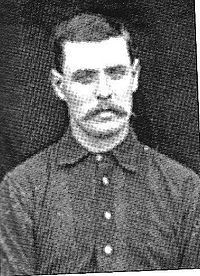
Tommy Clare was considered to be one of the first professional footballers at Stoke Football   Club, in fact he was one of seven, the plucky full-back signed up along with; Phillip Birch, Edgar Montford, Ted Smith, George Shutt, Alf Edge and Bernard Rhodes in August 1885; with each player in turn agreeing to a fee of half a crown per game (equivalent to 12p). Even in those days, although the term ‘football agents’ hadn’t yet been  thought of, money still became an issue, and when the club attempted to  introduce a different payroll for more experienced or senior players, they went  on strike...
Picture
Thomas Clare

Clare, Thomas (Full-Back)
Born: March 1865,
Congleton, Cheshire
Died: 27 December 1929, Ladysmith, Vancouver (Canada)
 Height: 1897: ‘about 6ft. Weight: 13st.’
 
Career: Talke Rangers (1880-82), Goldhill Wanderers (1882-84), Burslem Port Vale (1884-85), Stoke (1885-97, 251 + 6), Burslem Port Vale (1897), Manchester City (trial, 1898, 1 + 0), Burslem Port Vale (1898-00, 23 + 0), England (1889-94, 4), Burslem Port Vale (manager, 1905-07).

The matter of the players payments was soon resolved, they would now each earn five shillings (25p), just over double what they would have originally being paid.

As well as the honour of being one of the first players to sign up to Stoke FC he also became the first captain and during his nine year stint represented his country England on four occasions.

Born in 1865 in the county of Cheshire the young tile maker would eventually go onto becoming a professional footballer for Stoke FC (they weren’t named Stoke City until 1925) and England.

He lived, according to the 1881 census at 21 John St, Wolstanton - Oldcott & Golden Hill, Stafford. At the age of 15 was already playing as an amateur for local side Talke Rangers, whilst two years later netted a deal at Goldenhill Wanderers.

In February 1884 he was picked up by Burslem Port Vale, again a local side but one with more stature which competed in the FA Cup –it was still a glamorous trophy to win at its time. Unfortunately for clubs like Vale they relied on the Cup competitions to generate revenue whilst would play out friendly fixtures for the times they weren’t playing.

It was for this reason that the clubs from the ‘North’, got together and decided to try and create a professional league; despite many objections the Football League was created in 1888. It consisted of only twelve clubs: Accrington, Aston Villa, Blackburn Rovers, Bolton Wanderers, Burnley, Derby County, Everton, Preston North End, Nott’s County, Stoke, West Bromwich Albion, and Wolverhampton Wanderers.

He made his Vale debut on 16 February in a friendly fixture against Chirk, after that he became a regular first team player. He also made one guest appearance in November 1884 before signing for a local rival.

Clare signed for Stoke in August 1885 and three years later would play in the first Football League game in the nation’s history. Until then they would rely on the FA Cup.

Despite being formed in 1863 the Potters didn’t enter the competition until 1883-84 campaign, by then the competition was already twelve years old. Clare’s first Cup experience would have most probably been against Crewe Alexandra on 31 October 1885 in the first round.

The game against the Railwaymen finished 2-2 at the Victoria Ground whilst a week later would lose 1-0 in a replay. This would have more or less ended there season as early as October and would be forced to look forward to friendly fixtures and an unofficial cup competition in the form of the Staffordshire Cup.

After blasting aside Caernarvon Wanderers 10-1 the following year in the first round of the FA Cup they found themselves undone in round two; although a brave performance Crewe once again showed there strengthens with a 6-4 victory.

1887-88; the assault on the greatest Cup competition in the World started with a convincing 1-0 home win over rivals Port Vale whilst winning 2-0 in round two over Over Wanderers was enough to seal a safe passage into the third round.

Stoke flew past Oswestry (now Total Network Solutions) at home with a comfortable 3-0 victory, they got all the way to round five only to lose to eventual winners West Bromwich Albion 4-1.

Their efforts wouldn’t have gone without reward – as well as their weekly pay package they would have earned 20 shillings (£1) as a bonus for each round they won.

In 1893 a writer in the
‘Athletic News Football Annual’ claimed that on average the then modern day footballer earned 60 shillings (£3) per week during the winter months and 40 shillings (£2) in the summer.

It is also reported that Tom Brandon, who applied his trade at Blackburn Rovers and an England international took home a staggering £4 per week in 1896 – this probably made the former Sheffield Wednesday full-back the highest paid player in England.

When the Football League finally arrived in 1888 it probably brought joy to the spectators – finally they could watch football on a weekly basis with the knowledge that each game was a professional game.

The Potters played their first game of the new season – officially Clare’s debut; at home to West Bromwich Albion at the old Victoria Ground (often named Athletic Ground also). The Baggies, with the aid of George Woodhall sealed a 2-0 victory.

For the first Football League - it was a triumph, Preston North End won the league without recording a lose, finishing 11 points clear of second placed Aston Villa whilst winning the FA Cup – beating Wolverhampton Wanderers 3-0 after a replay.

It was somewhat of an injustice that Stoke were placed bottom of the first Football League season; they had finished level on points with Nott’s County but Stoke had the better goal difference (-25), eight goals better in fact than County (-33). This was how the Nottinghamshire club earned the nickname of the Magpies – as in thieving.

Stoke however found it a disaster, beaten 7-0 at Preston in early October, finishing bottom and not recording a win from 8 December until the season finished on 20 April. Still they had consolation that a Second Division wouldn’t be formed until 1892 – and thus they couldn’t be relegated, this with Stoke installing Clare as club captain.

And, it was whilst at the Athletic Ground that he won four caps for England, he played twice against Northern Ireland (1889 and 1892), Wales (1893) with his final cap coming against Scotland in 1894.

This certainly was an honour in itself, it possibly meant more then than what it means now a days to receive a call up. There were no substitutes – Thomas would have felt privileged to be considered as one of the best eleven players in the Country but like in Cricket the team was chosen by a committee.

It could be possible that his most honourable game came against Wales on 13 March 1893; England won a staggering 6-0 in front of a Stoke crowed with his team mate Joseph Schofield playing as a forward – Schofield netted one of the goals whilst Sheffield Wednesday’s Fred Spiksley bagged a brace.

Unfortunately for Stoke they were forced to sit out the entire 1890-91 season having finished as the bottom club for the previous two campaigns, however they were soon back. They only just escaped being voted out when they finished 13th out of a possible 14 but when the league was extended in 1892-93 and promotion-relegation play-offs introduced they exceeded all expectations with a comfortable sixth placed finale.

They were almost on the brink of relegation once again; they finished 13th in the table but were still forced to participate in a play-off against relegation during the 1894-95 season. They played Newton Heath (now Manchester United) on a neutral ground; Port Vale in fact. Stoke won convincingly 3-0.

He left Stoke in July 1897 and returned to one of his former clubs’ Burslem Port Vale. He had managed 198 Football League appearances whilst scoring four goals, and played 53 FA Cup games and scored just twice from defence with Stoke.

As well as his England call-ups he received local honors when he represented Staffordshire on several occasions.

Despite what seemed ‘inconsistent’ with an inability to win games it wasn’t through the fault of Clare. At the time Stoke had one of the best defences in the league. William Rowley (keeper), Tommy Clare (right-back) and Alf Underwood (left-back) all gained international honours and formed a solid and reliable back line.

They were however let down by the forever changing forward line, in one season alone no fewer than 18 players held a position upfront. They weren’t helped either by the poor discipline; on one occasion (on 6 October 1888) John Tunnicliffe and Swift both missed the train to Preston. In the end Stoke accepted North End’s invitation of playing two of the opposition’s reserve players – regardless Stoke lost 7-0..

After a year at Vale as player-coach he went to Manchester City on trial; he played just once against Newcastle United. The Magpies beat the Citizens 2-0 in the North East on 16 March 1898 and Clare soon returned to the Potteries.

He was placed as a regular at right-back during the 1897-98 campaign, for which he ‘inspired the players with a confidence never before approached.’ Some local success came his way; he played 23 outstanding games for the Valliant’s with whom he won the Staffordshire Cup in 1898.

Upon his return from City he was reinstated as player-coach until leaving his post in 1906 when the club could no longer afford to keep him. He had already retired from playing at the aged 34 in April 1899 but a year later (August 1900) decided to take to the field once more.

He had, in October 1898 unfortunately took one challenge too many – he broke his leg and was never the same player again.

Clare had unofficially made 59 appearances for Vale in total having played 18 times in the Football League and five in the FA Cup. He also played in other competitions such as the Central League (21 appearances), Birmingham Cup (3), Staffordshire Cup (5) whilst he also featured in seven friendly fixtures.

After his Port Vale career was over he gave it up as a bad job having not being successful at management. He immigrated to Canada, presumably he had family living over their. He died on 27 December 1929 – aged 64 in Vancouver.

He was described as an ‘inspirational’ leader whilst for his playing ability he was a ‘splendid’ header of the ball and was quick off the mark, strong and had a sense of purpose in the team.

Thomas’ father; also named Thomas was an Earthenware Manufacturer, so as to why he chose to follow the path of a footballer isn’t quite understood, never the less the game itself might not have been what it is today without him.

Edited: June 2006

0 Comments


Leave a Reply.


    Categories

    All
    Arsenal
    Aston Villa
    Barnsley
    Blackburn Rovers
    Blackpool
    Boston United
    Bradford City
    Bristol Rovers
    Burnley
    Bury
    Cheltenham Town
    Chesterfield
    Colchester United
    Crewe Alexandra
    Crystal Palace
    Derby County
    Doncaster Rovers
    Dorchester Town
    Everton
    Exeter City
    Falkirk
    Grimsby Town
    Ipswich Town
    Leeds United
    Leicester City
    Liverpool
    Luton Town
    Manchester City
    Manchester United
    Mansfield Town
    Middlesbrough
    Millwall
    Newcastle United
    Norwich City
    Notts County
    Oxford United
    Peterborough United
    Plymouth Argyle
    Portsmouth
    Port Vale
    Reading
    Rotherham United
    Scunthorpe United
    Sheffield United
    Sheffield Wednesday
    Stoke City
    Swansea City
    Torquay United
    Tottenham Hotspur
    Walsall
    West Bromwich Albion
    Wolverhampton Wanderers
    Wrexham

Powered by Create your own unique website with customizable templates.
Photos from Richard_of_England, abooth202, danheap77, Czermak Photography, vagueonthehow, Bonnett, ell brown, Vic.t
  • :: Home ::
  • Teams
    • Premier League
    • Championship
    • League One
    • League Two
  • :: Resources ::
  • :: Contact ::
